
ComplexSoftware.
Systems engineering for problems with real constraints.
Custom architecture, internal platforms, data pipelines and integrations — built to stay correct as the business changes around them.
When the problem does not fit inside a template.
Off-the-shelf software forces the business to bend. Custom systems do the opposite — they encode how the work actually happens.
06 / Technical capabilities
Eight areasCustom software architecture
Domain modelling and system boundaries defined before implementation — because architecture is the only decision that is expensive to reverse.
Internal platforms
Operational tools for the people who run the business: dense, fast and shaped around the real process, not an idealised one.
Business process automation
Rules, approvals and workflows encoded once, observable end to end, with a clear audit trail.
Data-heavy systems
Ingestion, transformation and reporting pipelines that stay correct under volume and remain explainable.
API ecosystems
Versioned, contract-tested interfaces designed to be consumed by your product, your partners and your future systems.
Third-party integrations
ERP, CRM, logistics and financial systems connected through resilient layers that fail loudly, not silently.
Legacy modernisation
Incremental replacement around live data and live users — no big-bang cutover, no frozen roadmap.
Infrastructure & deployment
Environments, pipelines, monitoring and rollback paths owned as part of the system, not bolted on at the end.
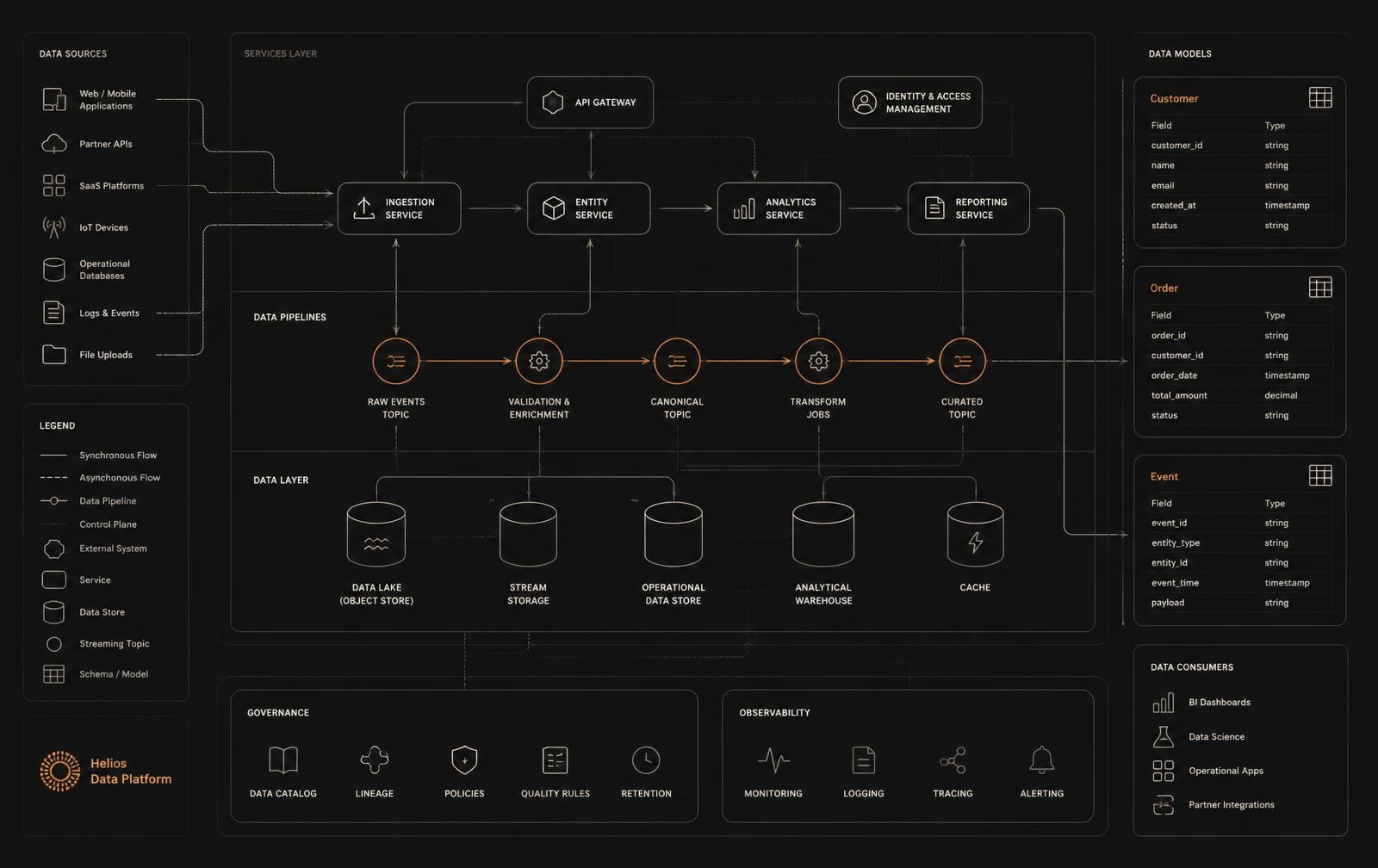 Architecture map — services, pipelines and data layer
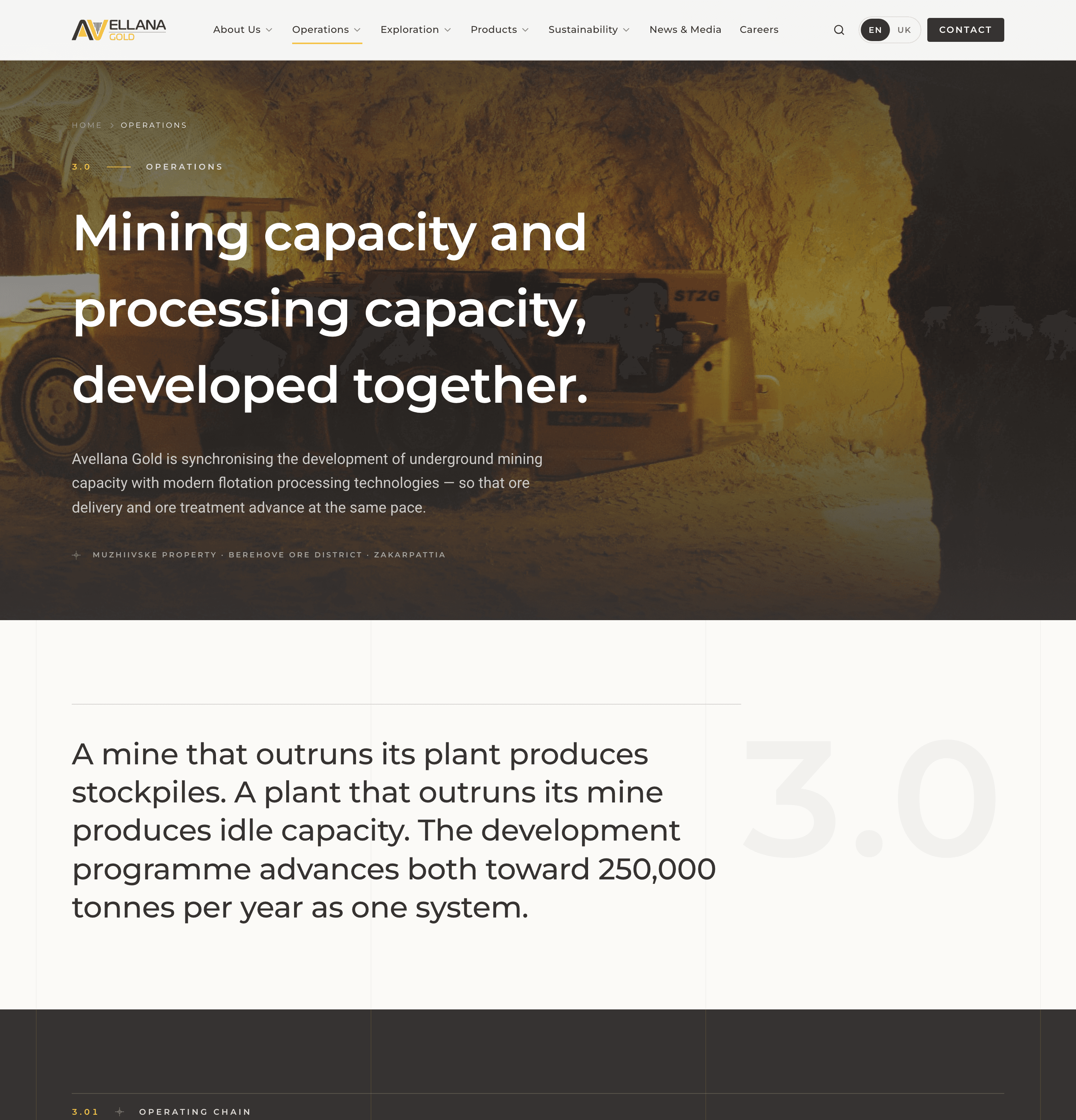 Operational interface — process sequence
08 / Method
Five stagesMap.
The existing systems, data and processes — including the parts nobody documented.
Model.
A domain model and integration contracts that make the complexity explicit.
Build.
Incremental delivery behind clear boundaries, tested against real data from the first week.
Migrate.
Cutover planned as a sequence of reversible steps, with the old system running until the new one proves itself.
Operate.
Observability, alerting and a maintenance model your team can carry.
09 / Typical briefs
A process running on spreadsheets and goodwill
We model the real workflow and replace it with a system that holds the rules and the history.
Systems that do not talk to each other
An integration layer with contracts, retries and monitoring — one source of truth instead of five.
Software that is too critical to replace
Strangler-pattern modernisation: new capability alongside the legacy system, migrated piece by piece.
A corporate digital platform that turns a complex mining and processing business into a coherent digital system. Complex software / 2026.

Tell us where your product needs to go. We will reply within two working days.
hello@nibilux.com
Nibilux is a brand operated by Liubov Vynohradova · NIP 5214080157